
“What is outside our solar system”
Exoplanets are the distant planets outside our solar system. Hunting exoplanets is the search for planets orbiting stars outside our solar system. Astronomers rely on clever techniques—most notably the Transit Method (watching a star dim as a planet crosses its face) and the Radial Velocity Method (measuring a star’s wobble)—to discover and study thousands of alien worlds. There are multiple methods like:
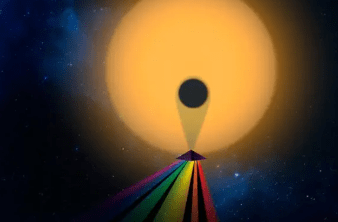
Transit Photometry: Telescopes constantly measure the brightness of stars. Any regular dip in the curve of light of a star means that there is a passing by planet.
Radial Velocity (Wobble): As a planet orbits, its gravity pulls on the host star. By measuring shifts in the star’s light spectrum, astronomers can calculate the planet’s mass.
Direct Imaging: Astronomers can block the blinding glare of a star by using advanced instruments and capture the pictures of large exoplanets.
Gravitational Microlensing: This utilizes the Einstein theory of gravity when the light of a star bends and becomes brighter around a planet passing by.
Telescopes like the Hubble and James Webb Space Telescopes help find exoplanets. The Hubble telescope was launched in 1990 before any exoplanets were even discovered. The JWST (James Web Space Telescope) is designed to see the universe in heat signatures, making it exceptionally well-suited for cold, faint planets. Other satellites like TESS (Transiting Exoplanet Survey Satellite) and the European Space Agency’s PLATO mission help in this search.
Some exoplanets can also be habitable like Proxima Centauri b, located just 4.2 light-years away in our closest neighboring star system, it is an Earth-sized rocky world orbiting within its star’s “Goldilocks” zone (the region where conditions are suitable for liquid water). Other planets like Kepler-186f or Gliese 12 b as they are within their stars habitable zone.


Leave a Reply