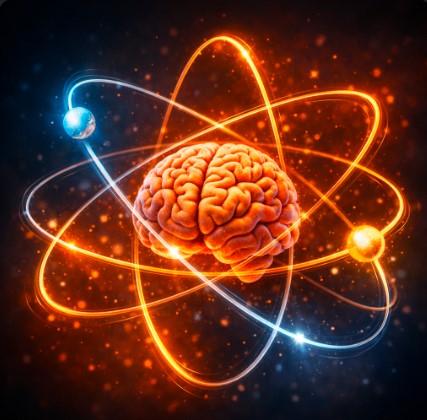
The life cycle a star can be millions to trillions of years long. It begins in a cosmic cloud of dust and gas called a nebula, where gravity collapses matter into a protostar. This ignites nuclear fusion, fueling the star for its long, stable lifetime.
The Life Cycle
- Birth of a star
All stars are born within stellar nurseries called nebulas. Over millions of years gravity causes dense clouds of dust and hydrogen to be clumped together. As the material clumps and collapses, it creates intense friction and heat. Once the core reaches millions of degrees, nuclear fusion ignites, causing hydrogen atoms to be compressed together under extreme pressure and temperature to form helium and a star is eventually formed.
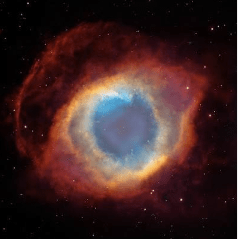
A nebula called as the Helix nebula
2. Adulthood
After the intense and extreme process that leads to the birth of a star, stars spend about 90% of their lives in the Main Sequence. This is the period of the life of a star where they generate steady energy by fusing hydrogen into helium, creating a balance between the inward pull of gravity and the outward pressure of heat. A star’s lifespan is entirely determined by its mass:
Low-mass stars– Red dwarf: These stars burn their fuel very slowly. This allows them to live for trillions of years.
Average stars– Like our sun: These stars burn at a moderate rate, staying in the main sequence for about 10 billion years.
High-mass stars: These giants burn through their fuel extremely fast, lasting only a few million years.
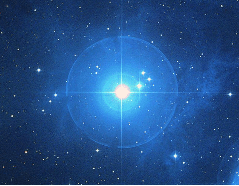
An image of a star in it main sequence(Adulthood)
3. Old Age: Red Giants and Supergiants
Once a star exhausts its core hydrogen, its core collapses and heats up, causing the outer layers of the star to puff outward and cool down. This expansion turns average stars into Red Giants, and massive stars into massive Red Supergiants. As the core starts to shrink it fuses heavier elements like oxygen and carbon.
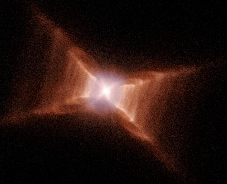
A star in its old age
4. Death
The death of a star depends on its size.
Average star: After expanding into a Red Giant, the star gently blows off its outer layers which leaves a glowing shell of gas called as a planetary nebula. The exposed core is left as a White Dwarf which is an incredibly dense stellar corpse the size of earth that slowly cools down over billions of years.
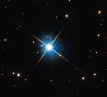
A white dwarf
High-Mass Stars: These stars undergo extreme cycles of fusion, continuously making heavier elements until they build up a core of iron. Once iron is made fusion stops and the core collapses leaving behind a supernova. The remaining core is crushed into either an incredibly dense Neutron Star or, for the most massive stars, a Black Hole.
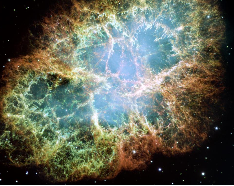
A supernova
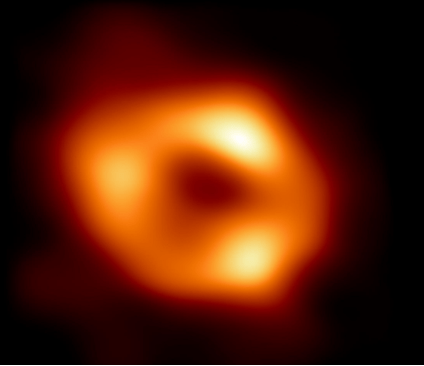
The first image taken of the black hole at the heart of the milky way
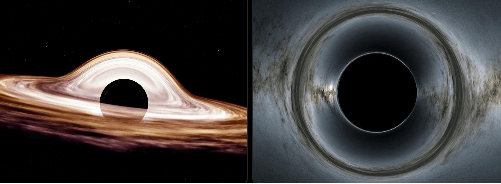
Depictions of how black holes would look like
A star’s temperature depends on its color.
Color Temperature
| Red | 2,200–3,200 °C |
| Orange | 3,200–4,700 °C |
| Yellow | 4,700–5,700 °C |
| Yellow-White | 5,700–7,200 °C |
| White | 7,200–9,700 °C |
| Blue-White | 9,700–29,700 °C |
| Blue | 29,700–49,700+ °C |
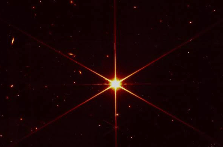
A star
 thethinkingatom
Leave a Reply